
Services E-Commerce Shopify Website Development E-Commerce SEO Product Marketing Performance...
Read MoreFebruary 26, 2026
What is SEO? How It Works and How to Rank on Google (2026)

by Rajesh Kumar
Performance Marketing Specialist | Growth Strategist
What is SEO? SEO (Search Engine Optimization) is the process of improving your website to rank higher on Google and drive organic traffic.
In simple terms, SEO helps your website appear when people search for products, services, or information online.

SEO helps websites rank higher on Google by improving content, performance, and user experience.
Search Engine Optimization, or SEO, is the process of improving a website’s visibility in search engines to attract organic traffic.
In today’s digital world, SEO has become one of the most powerful ways to rank higher on Google and grow your business online.
For a website owner, business leader, or student, understanding SEO means knowing how to get more visitors and potential customers.
When someone searches for services like a “best saree boutique” or “enterprise cloud solutions,” search engines like Google act as matchmakers—and SEO helps your business get discovered.
Table of Contents
What is SEO and Why is it Important?
How Search Engines Work?
Understanding how SEO works is the key to ranking higher on Google.
Search engines like Google follow a simple 3-step process to
find, understand, and rank websites: crawling, indexing, and ranking.
How SEO works can be understood through three key steps: crawling, indexing, and ranking, which determine how websites appear on Google.
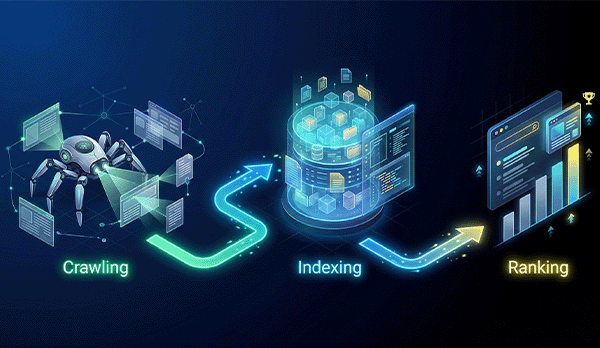
Understanding how search engines work helps you optimize your website for better visibility and higher rankings.
Understanding how SEO works helps you optimize your website for better visibility and higher rankings.
Crawling
Crawling is the first step in how SEO works. Search engines use automated bots (also called
crawlers or spiders) to scan the internet and discover new pages.
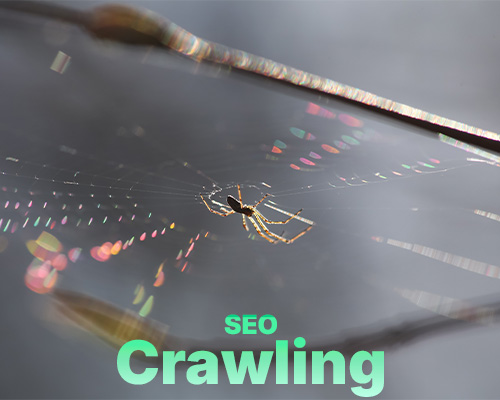
SEO crawling is the process where search engine bots scan your website to discover pages and content for indexing.
Crawling is the foundation of how SEO works, helping search engines find and understand your content.
These bots move from link to link, finding new content, updated pages, and even broken or dead links. This process is known as SEO crawling, and it is the first step in how SEO works.
Today, crawling has become smarter and more selective. Search engines prefer websites that have a clear sitemap and clean URL structure, because they are easier to navigate and help bots scan content more efficiently.
Indexing
Indexing is the process where search engines store and understand your content.
SEO indexing is the process where search engines store your content so it can appear in search results.
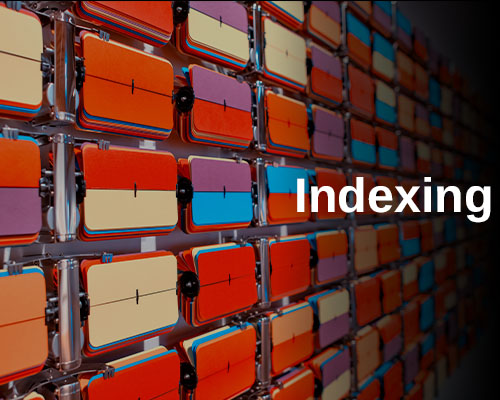
Without proper indexing, your website cannot rank on Google, no matter how good your content is.
After a page is discovered, the next step is indexing. This is where search engines analyze your content—such as text, images, and videos—to understand what your page is about.
Once analyzed, this information is stored in a massive database called the search index, which works like a digital library of all the web pages Google has discovered.
If your page is not indexed, it will not appear in search results. That’s why indexability is essential for SEO success.
Ranking
Ranking is the final step in how SEO works, where search engines decide which pages appear at the top of search results.
SEO ranking determines how high your website appears on Google based on relevance, quality, and user experience.
When someone searches on Google, the search engine checks its database to find the most relevant and useful content.
This ranking is based on many factors, including keyword relevance, website speed, and the quality of backlinks.
Today, Google focuses more on experience and expertise, rewarding content that provides real value instead of generic information.
To rank higher on Google, your content must be helpful, trustworthy, and optimized for both users and search engines.
SEO Process Explained
SEO works by helping search engines discover, understand, and rank your content.
First, search engines crawl your website to find pages. Next, they index your content in a database. Finally, they rank pages based on relevance, quality, and user experience to show the most useful results.
The Different Types of SEO
SEO is not just one technique—it is a combination of different strategies that work together to help your website rank higher on Google.
To succeed in SEO, you need to understand the four main types of SEO and how they impact your website’s visibility and performance.
Understanding the types of SEO helps you build a strong strategy by combining on-page, off-page, technical, and local optimization techniques.
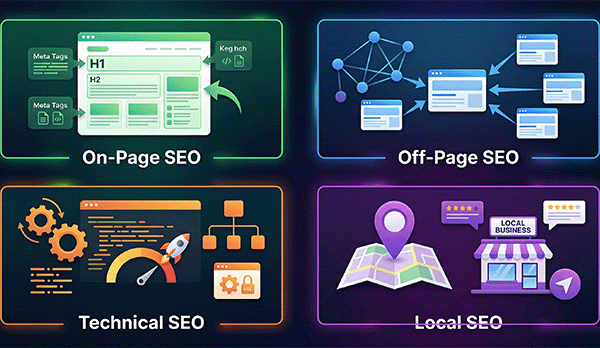
Each type of SEO plays a unique role in helping your website rank higher on Google and attract the right audience.
How Does SEO Work?
On-page SEO focuses on optimizing everything within your website to improve rankings and user experience.
This includes elements like content quality, keywords, headings, internal links, and page structure.
Think of it like cleaning and organizing your room—everything should be easy to find for both users and search engines.
A well-optimized page helps search engines understand your content better and increases your chances to rank higher on Google.
Off-Page SEO
Off-page SEO focuses on activities outside your website that help build your authority and trust in the eyes of search engines.
It is similar to word-of-mouth marketing—the more people talk about your website, the more trustworthy it appears.
One of the most important parts of off-page SEO is backlink building. When other reputable websites link to your content, it acts like a vote of confidence for your site.
Search engines also consider social signals, such as sharing content on platforms like Instagram and LinkedIn, which helps increase visibility and engagement.
Another key factor is online reputation management, which includes getting positive Google reviews and managing your brand mentions across the internet.
Technical SEO
Technical SEO focuses on optimizing the backend of your website so search engines can crawl and index your pages efficiently.
It ensures your website runs smoothly and provides a better experience for both users and search engines.
Some important aspects of technical SEO include:
| Technical SEO include: | |
|---|---|
|
Website speed |
Faster loading pages reduce bounce rates and improve rankings. |
|
Mobile-friendliness |
Optimizing your site for mobile users, as most searches now happen on mobile devices. |
|
HTTPS security (SSL) |
Securing your website to build trust and protect user data. |
|
Sitemaps and robots.txt |
Helping search engines understand your website structure and crawl it effectively. |
Local SEO
Local SEO helps businesses appear in search results for a specific location, making it ideal for local services and shops.
helps businesses appear in search results for a specific location, making it ideal for local services and shops.
For example, when someone searches for a “dentist near me” or “real estate agent in Delhi”, local SEO determines which businesses appear.
To succeed in local SEO, you need to focus on the following key factors:
| Key Elements of Local SEO That Improve Your Rankings | |
|---|---|
|
Google Business Profile (GBP) |
Creating and optimizing your profile to appear in the local map results. |
|
Local citations |
Keeping your business name, address, and phone number consistent across directories. |
|
Geo-targeted content |
Creating content focused on your city or region to attract local customers. |
Local SEO helps businesses appear in Google Maps and local search results.
Keyword Research Explained
Keyword research is the process of finding the exact words and phrases people use to search on Google.
In today’s SEO, it is not just about search volume—it’s about understanding user behavior and what people are actually looking for.
The keyword funnel helps you understand how users move from learning to buying, allowing you to target the right keywords at each stage.
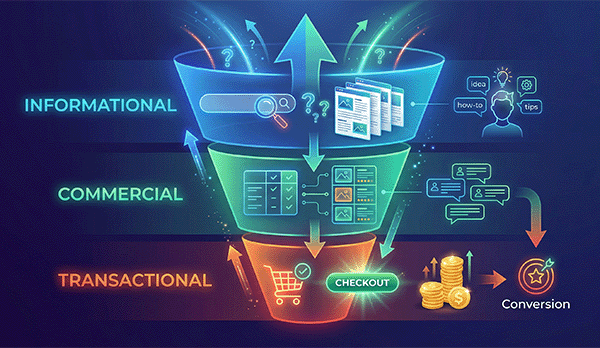
By focusing on search intent, you can create content that attracts both traffic and conversions.
However, SEO is not just about keywords—it also involves technical optimization, content quality, and user experience.
The Keyword Metrics You Must Know
To choose the right keywords, you need to understand these important metrics:
- Search Volume – The number of times a keyword is searched each month. High-volume keywords like “saree” get more traffic, while specific keywords like “hand-woven silk saree Mumbai”have lower volume but higher intent.
- Keyword Difficulty (KD) – Shows how hard it is to rank for a keyword. Beginners should focus on low competition keywords to get faster results.
- Cost Per Click (CPC) – The amount advertisers pay per click. A higher CPC usually means the keyword has strong commercial value.
- Search Intent – The reason behind a search. To rank on Google, your content must match what the user actually wants.
Head Keywords vs Long-Tail Keywords
Understanding the difference between keyword types is essential for building a strong SEO strategy.
- Head Keywords (Short-Tail) – Broad terms like “insurance” or “SEO”. They have high search volume but are very competitive and difficult to rank.
- Long-Tail Keywords – More specific phrases like “affordable health insurance for seniors in Kolkata”. These keywords have lower competition and are easier to rank for, especially for new websites.
Focusing on long-tail keywords helps you attract targeted traffic and build authority over time.
On-Page SEO Techniques
Modern on-page SEO is no longer about keyword stuffing—it’s about creating content that is relevant, helpful, and easy for both users and search engines to understand.
One of the most important parts of on-page SEO today is user experience, which is measured using Core Web Vitals.
A strong on-page SEO checklist ensures your content is properly optimized using elements like headings, meta tags, internal links, and image optimization.
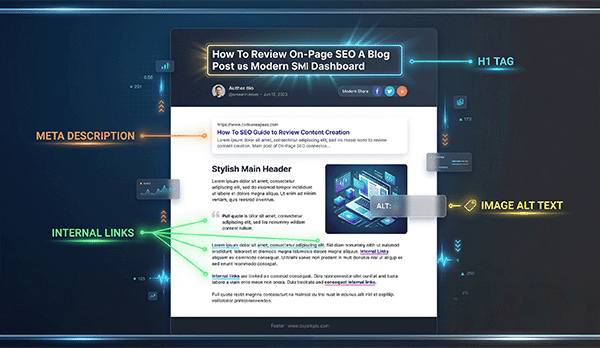
Optimizing these on-page SEO elements helps search engines understand your content and improves your chances of ranking higher on Google.
Core Web Vitals (CWV)
Google uses three key metrics to evaluate how users experience your website in real time:
Core Web Vitals are key technical SEO metrics that measure how fast, responsive, and stable your website is for users.

Improving LCP, INP, and CLS helps enhance user experience and increases your chances of ranking higher on Google.
| Core Web Vitals: The 3 Metrics That Impact Your SEO Rankings | |
|---|---|
|
Largest Contentful Paint (LCP) |
Measures how quickly the main content of your page loads.
Aim for under 2.5 seconds for a good user experience. |
|
Interaction to Next Paint (INP) |
Measures how fast your website responds when a user interacts with it (like clicking a button).
Aim for under 200 milliseconds. |
|
Cumulative Layout Shift (CLS) |
Measures how stable your page layout is.
Avoid elements that suddenly move while loading, and aim for a low CLS score. |
Improving these metrics helps you rank higher on Google and deliver a better experience to your users.
Advanced Content Optimization
- Complete Guide to Semantic SEO
- How to Optimize Content for Featured Snippets
- Image SEO Best Practices for Higher Rankings
Link Building Strategies
- Complete Guide to Link Building Strategies
- How to Get High-Quality Backlinks in SEO
- Beginner to Advanced Link Building Techniques
SEO vs Google Ads (PPC)
- SEO vs Google Ads: Which is Better for Your Business?
- SEO vs PPC: Key Differences Explained
- When to Use SEO and When to Use Google Ads
Common SEO Mistakes to Avoid
As search engines become smarter, using outdated SEO tricks can actually hurt your rankings instead of improving them.
Avoid these common mistakes to ensure your website grows safely and sustainably:
- Keyword stuffing – Adding too many keywords unnaturally makes your content hard to read. Google now prefers natural and user-friendly content.
- AI content without human editing – Publishing mass-generated content without adding value can lead to penalties. Always ensure your content is unique and helpful.
- Ignoring mobile optimization – In India, most users browse on mobile. A slow or poorly designed mobile site can hurt your rankings.
- Buying low-quality backlinks – Links from spammy websites can damage your SEO and may even get your site removed from search results.
- Targeting the wrong search intent – If your content doesn’t match what users are looking for, it won’t rank, no matter how well it is optimized.
How Beginners Can Start SEO (Step-by-Step)
Starting SEO as a beginner can feel confusing, but following a clear step-by-step process makes it much easier.
Here’s a simple roadmap to help you get started with SEO:
- Step 1: Set up Google Search Console (GSC) – This is your direct connection with Google. It shows which keywords you rank for and helps you identify indexing issues.
- Step 2: Set up Google Analytics (GA4) – Track your website traffic, user behavior, and conversions to understand what’s working.
- Step 3: Keyword Research – Use tools like Google Trends and Ubersuggest to find low-competition keywords in your niche.
- Step 4: Technical SEO Audit – Check for broken links, slow pages, and errors using Screaming Frog.
- Step 5: Content Creation – Publish high-quality, helpful content regularly targeting your keywords.
- Step 6: On-Page Optimization – Optimize your titles, headings, images, and internal links with proper keywords.
- Step 7: Build Local Presence – Optimize your Google Business Profile and collect reviews to improve local rankings.
- Step 8: Monitor and Improve – Regularly check your performance in Google Search Console and update your content to improve rankings.
The Future of SEO and AI Search
SEO is evolving rapidly. Today, it is no longer just about ranking on Google—it’s about being visible across multiple platforms, including AI tools and voice-based search.
AI Overviews and GEO
With the rise of AI-powered search, platforms like Google AI Overviews and tools like ChatGPT now provide direct and summarized answers to users.
To appear in these results, your content must be clear, well-structured, and trustworthy. This approach is known as Generative Engine Optimization (GEO).
Voice and Visual Search
More users are now using voice search, which means conversational and long-tail keywords are becoming more important than ever.
Furthermore, visual search is growing rapidly, especially in e-commerce. Users can now search by uploading images, making image SEO and proper labeling essential for better visibility.
Why is SEO Important?
SEO is important because it helps businesses increase visibility, build trust, and attract the right audience at the right time.
When your website appears at the top of search results, it captures users who are actively searching for your products or services. As a result, SEO drives high-intent traffic and supports long-term growth without depending only on paid ads.
Frequently Asked Questions (FAQ)
Here are some of the most common questions about SEO that beginners often ask:
What is SEO in simple words?
SEO is the process of improving your website so search engines like Google can understand it and show it to the right people. In simple terms, it helps your website become easy to find, easy to understand, and trustworthy.
How long does SEO take?
SEO usually takes around 3 to 6 months to show noticeable results. However, it depends on your competition, strategy, and consistency. SEO is a long-term process, not a quick fix.
Is SEO free?
SEO traffic is free because you don’t pay for clicks. However, SEO requires effort like content creation, optimization, and link building, which may need time or investment.
Can beginners learn SEO?
Yes, beginners can easily learn SEO. By focusing on keyword research and creating helpful content, you can start seeing results with consistent practice.
Does AI content rank on Google?
Yes, Google ranks content based on usefulness, not how it is created. But low-quality or spammy AI content will not rank well. Focus on quality and originality.
What is the full form of SEO?
SEO stands for Search Engine Optimization. It means optimizing your website to rank higher in search engines like Google.
Do I need to hire an SEO agency in India?
If you are a beginner or small business, you can start SEO yourself. But for competitive industries, hiring an SEO expert or agency can help you grow faster.
Is SEO dead in the age of AI?
No, SEO is not dead. It is evolving. AI tools still rely on content from websites. Good SEO helps your content get discovered and used by AI platforms.
What is Local SEO?
Local SEO helps your business appear in local search results like “near me” searches. It focuses on location-based optimization and Google Business Profile.
What is the first step in SEO?
The first step is setting up tools like Google Search Console and Google Analytics. This helps you track your performance and understand what’s working.
Final Thoughts
SEO is not a quick trick to get traffic overnight—it is a long-term strategy that builds your website’s visibility step by step.
By focusing on helpful content, improving your website performance, and understanding what users are actually searching for, you can steadily grow your rankings on Google.
Consistency is the key. The more value you provide, the more trust you build with both users and search engines.
If done right, SEO can become one of the most powerful growth channels for your business in India—bringing long-term traffic without depending only on ads.
